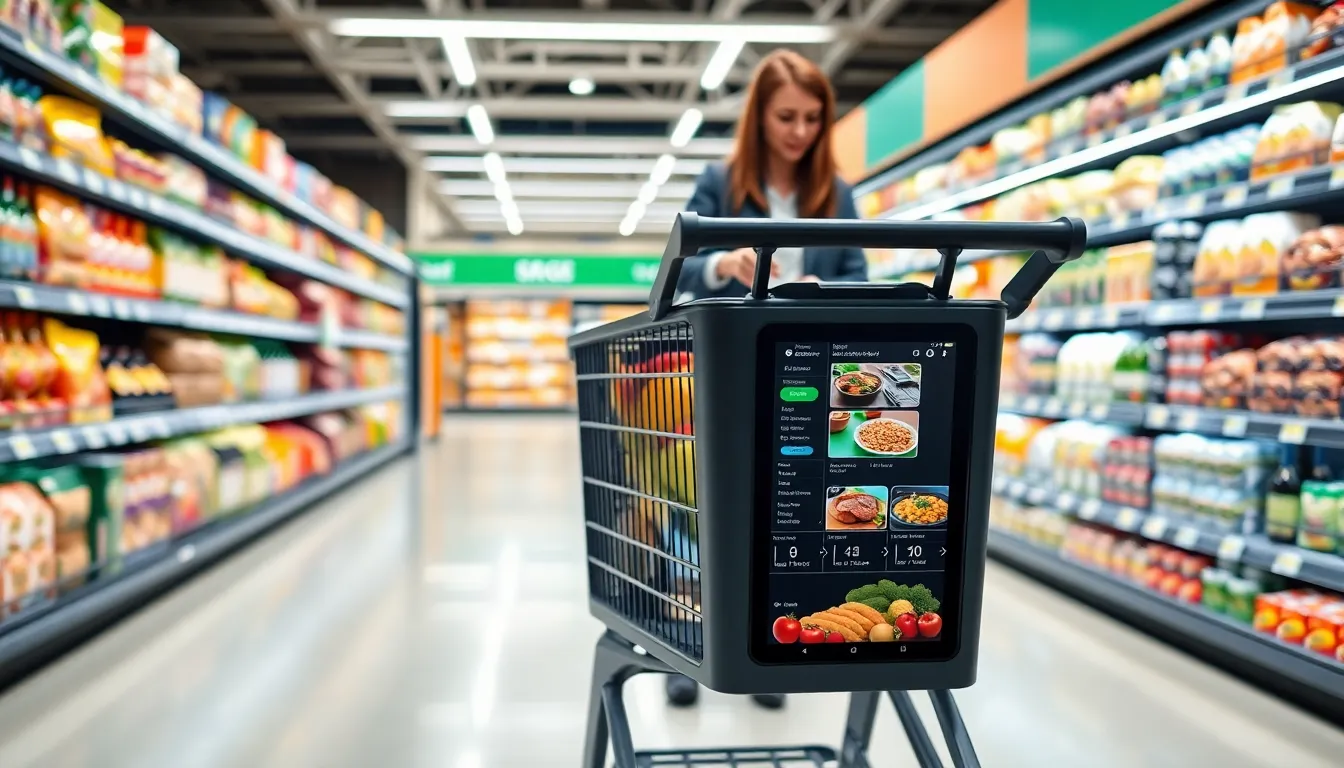
Grocery shopping is often a necessary chore that people endure rather than enjoy. But what if there was a way to transform this drudgery into a smarter, more efficient experience? Enter smart shopping carts, these high-tech carts are not just shiny gadgets: they could very well revolutionize the way you shop. Imagine a cart that helps you find items, keeps a running total of your expenses, and maybe even tells you what to cook for dinner. Sounds like something out of a sci-fi movie, right? Yet here we are, on the brink of integrating cutting-edge technology into the mundane world of grocery shopping. Let’s dive deeper into the world of smart shopping carts and discover how they’re set to change grocery shopping for the better.
What Are Smart Shopping Carts?

Smart shopping carts are essentially your regular grocery carts but upgraded with technology designed to simplify the shopping experience. They often come equipped with an intuitive touchscreen, sensors, and sometimes even built-in scales. With these features, they can help customers navigate stores, optimize their shopping lists, and even streamline the checkout process. These carts create a more interactive shopping environment and aim to minimize the hassle often associated with traditional shopping.
Key Features of Smart Shopping Carts
Smart shopping carts boast a variety of impressive features, each aiming to enhance convenience and efficiency for shoppers.
- Touchscreen Interface: Most smart carts feature a user-friendly touchscreen allowing shoppers to browse store layouts, find items, and view current deals. This technology reduces that awkward moment of searching for a product while someone else is waiting impatiently behind you.
- Barcode Scanning: Many carts are equipped with barcode scanners to quickly add items to your virtual cart, letting you keep track of prices in real-time. This can prevent any unexpected surprises at the checkout.
- Weight Sensors: Smart carts can weigh items as they’re placed inside, ensuring that customers only pay for what they actually buy. It’s like having your own little security guard ensuring you aren’t accidentally slipping an extra sandwich into the cart.
- GPS and In-Store Navigation: Some carts come with GPS capabilities designed for larger grocery stores, directing customers to their chosen items and helping them avoid those aimless wandering sessions.
- Payment Integration: With several carts offering built-in payment systems, shoppers can check out seamlessly, eliminating long lines and allowing for a quicker exit.
Benefits of Using Smart Shopping Carts
Utilizing smart shopping carts can bring a multitude of advantages to the grocery shopping experience.
- Time Efficiency: One of the most significant benefits is the time saved. No longer must shoppers wander aimlessly looking for items: smart carts help streamline the process, allowing for quick and efficient shopping trips.
- Cost Control: As items are added to the cart, the running total appears on the screen. This helps shoppers stick to budgets, preventing impulsive purchasing that can lead to overspending.
- Enhanced Shopping Experience: With features like in-store navigation and product recommendations, the overall shopping experience becomes more enjoyable and rewarding, transforming grocery shopping into a task people look forward to instead of dread.
- Reduced Checkout Time: Smart carts can help faster checkouts, as payments can often be done directly through the cart itself, minimizing wait times and frustrating lines.
Challenges and Limitations of Smart Shopping Carts
Smart shopping carts aren’t without their challenges. While they bring a treasure trove of benefits, several limitations can arise.
- Technical Glitches: Like any technology, smart carts can occasionally malfunction. Imagine the frustration of a cart that suddenly freezes as you try to scan your groceries: a simple shopping trip could turn into a tech nightmare.
- Cost: The initial investment costs for retailers can be high, potentially leading stores to pass the costs onto consumers.
- Privacy Concerns: With smart technology comes the worry over data privacy. Shoppers may be hesitant to fully embrace smart carts if they feel their shopping habits are being monitored.
- User Adaptability: Not everyone is tech-savvy. Some customers, especially older generations, might feel overwhelmed by the tech-heavy approach, leading to possible resistance or frustration.
The Technology Behind Smart Shopping Carts
Delving into the technology behind these innovative carts reveals a fascinating blend of several advanced components.
- Sensors and Cameras: Smart carts often contain sensors that detect items as they’re added and cameras that track the cart’s movement within the store.
- Artificial Intelligence: AI algorithms analyze shopping patterns and recommend products based on previous purchases or preferences, guiding customers to items they might need.
- Cloud Computing: Many smart carts use cloud technology for real-time data processing, allowing for seamless integrations and updates as stores introduce new products or layouts.
- Mobile Connectivity: Bluetooth or Wi-Fi capabilities enable carts to connect with shoppers’ smartphones, enhancing the personalization of the shopping experience.
The Impact of Smart Shopping Carts on Retail
The integration of smart shopping carts can have far-reaching effects on retail, changing the dynamics of both customer experience and operational efficiency.
- Improved Inventory Management: Retailers can gain insight into what items are popular among shoppers and adjust stock levels accordingly, minimizing waste and increasing sales.
- Enhanced Customer Relationships: By personalizing the shopping experience through recommendations, retailers can foster stronger relationships with customers, leading to increased loyalty.
- Cost Savings: In the long run, smarter shopping carts can lead to reduced labor costs. With automated checkouts and streamlined processes, fewer employees may be needed during peak hours.
Future Trends in Smart Shopping Cart Technology
Looking ahead, several exciting trends are set to shape the world of smart shopping carts.
- Integration with Smart Home Devices: Future carts could connect with smart home devices, enabling users to compile shopping lists from their fridges and cabinets while automating re-orders.
- Greater AI Personalization: As AI technology advances, shoppers can expect even more tailored recommendations that could take into account dietary restrictions and personal preferences.
- Sustainability Features: With the focus on sustainability, future smart carts may help track consumers’ carbon footprints or suggest eco-friendly products, aligning grocery shopping with environmental values.